
Love is the Drug, and We’re All Addicted
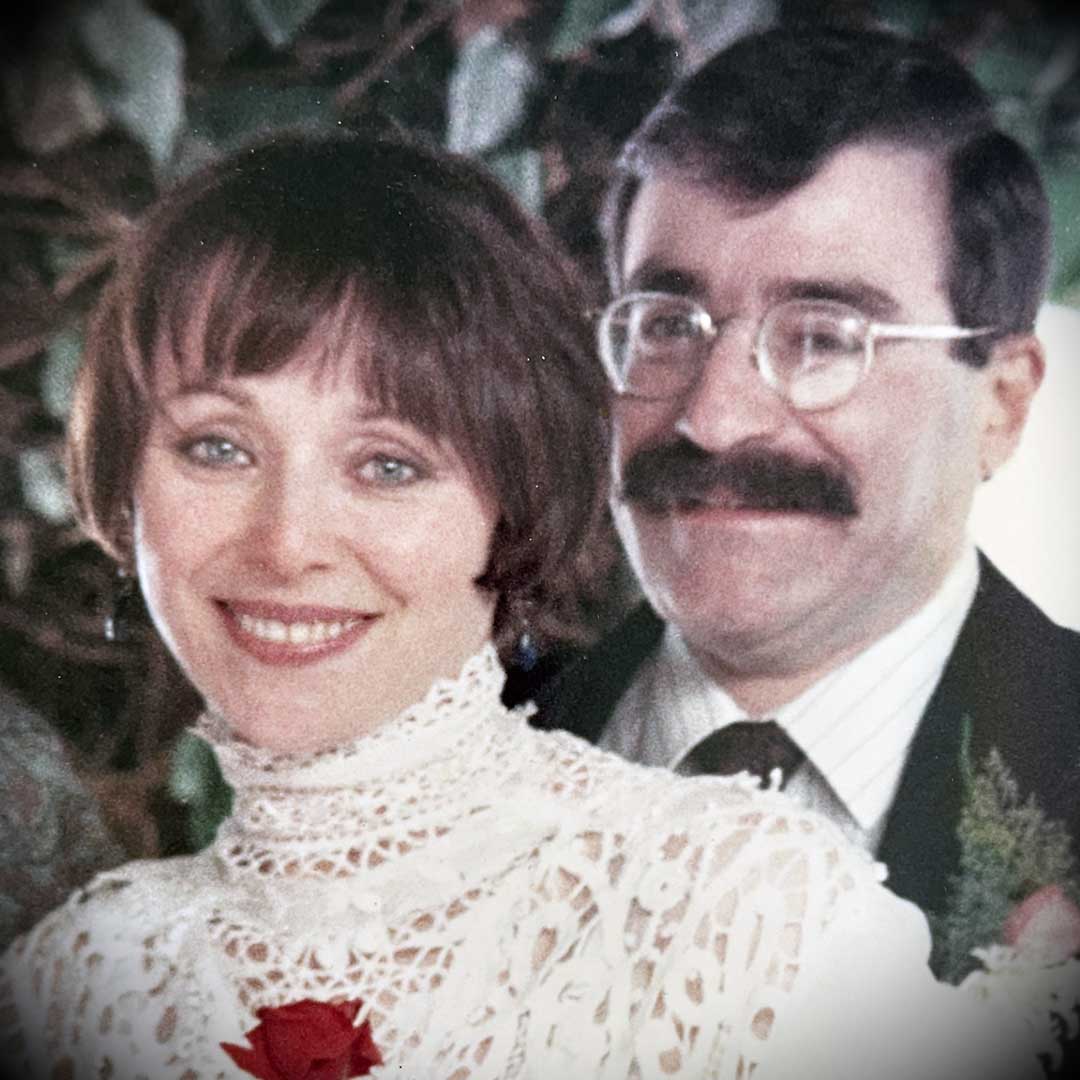
His name was Dan. My darling, impossible husband and soul mate. My component part. The man who asked me to marry him on the fourth date promised me a calm, secure incarnation and then reneged on the deal. He died because he betrayed himself. And me.
You really cannot make this stuff up.
I have been thinking about Dan lately because I am finishing a book about him. About us. About what happened after he died, when he started talking to me from wherever it is we go when we go. And about what I have learned in twenty-five years of sitting across from people who are heartbroken, stuck, or quietly desperate, trying to figure out why love does this to us.
Why love, the thing we want most, is also the thing most likely to wreck us.
Here is what I have come to believe: love is a drug. Literally.
THE NEUROSCIENCE OF WANTING
When you fall in love, your brain floods with dopamine. That is not a metaphor. It is biochemistry. The same reward pathway that lights up for cocaine lights up when you see the person you love walk into a room. The same circuitry that drives addiction drives attachment.
This is why heartbreak feels like withdrawal. Because it is.
This is why we go back to people who are wrong for us, over and over, long past the point of reason. The brain does not distinguish between a good and a bad source of dopamine. It just wants more.
And when the source of that dopamine disappears, whether by death or divorce or simple drift, the brain goes into a kind of grief that is also, neurologically speaking, a kind of detox. No wonder it is so brutal. No wonder people come into my office six months, two years, a decade after a loss and say: I don’t understand why I can’t get over this.
WHEN LOVE BECOMES OBSESSIVE
Here is where it gets complicated. For some people, the withdrawal does not just hurt. It loops.
The brain replays the loss on a loop. You wake up thinking about them. You check their Instagram at 2 a.m. You rehearse conversations you will never have. You know, rationally, that it is over. And yet the circuit keeps firing.
This is not a weakness. This is not drama. This is what OCD looks like when it latches onto love.
Obsessive-compulsive patterns around relationships and loss are more common than most people realize. The checking, the ruminating, the inability to let go even when you desperately want to, these are symptoms, not character flaws. The brain has learned that this person equals survival, and it refuses to update that belief, no matter what the rational mind says.
Hypnotherapy works beautifully here because it bypasses the conscious mind and speaks directly to the part of the brain running the loop. We are not talking our way out of the pattern. We are going underneath it, to where the pattern was installed, and quietly unplugging it.
Past-life regression can take this even deeper. Sometimes the obsessive attachment comes from more than this lifetime. Sometimes the soul has been in this pattern before, with this person or with someone who carries the same energetic signature. When clients see those prior agreements clearly, the compulsion to hold on often dissolves on its own. Not because they forced it. Because they finally understood it.
WHAT HAPPENED IN CHARTRES
I want to tell you one story. Just one.
Six months after Dan died, I traveled to France with his ashes. In the 1600s, we’d lived together as nuns, and he wanted to be buried there. So I took his ashes to the cathedral at Chartres. To the great bronze bell.
After I climbed the winding, narrow stairway all the way up to the top of the church, I looked out on the winter landscape, and then I threw his ashes onto that bell. The bell began to ring at once, and it rang for a solid fifteen minutes.
I stood there, looking out over the town to the horizon, and thought: This is the weirdest thing that has ever happened to me; now I have completely lost my mind.
Twenty-five years later, I no longer think those are mutually exclusive.
That moment is in the book. Along with everything else Dan told me from the other side, which turned out to be quite a lot, delivered with the particular brand of humor he had in life: dry, a little smug, and almost always right.
The book is called
Love From Both Sides: A True Story of Love, Loss, and Reincarnation. It is coming out in November 2026.
WHAT LOVE ACTUALLY IS
In over twenty-five years of practice, I have helped hundreds of people untangle themselves from the stories love told them. The agreements they made before they knew better. The patterns inherited from people they never met, in lives they can’t remember living.
What I have learned is this: love is not just chemistry. It is also a contract—soul-level agreement. The people who break us open are rarely accidents. They are, most of the time, exactly who we agreed to meet.
Dan promised me a calm, secure incarnation. He did not deliver. But he delivered something else: the absolute certainty, earned the hard way, that love does not end with death, that the soul survives. That the people we love are not gone.
They are just on the other side of a very thin wall.
And sometimes, if you are very still, you can hear them.
HOW CAN THIS HELP YOU?
If you are reading this, you have probably loved someone. Possibly someone who wrecked you. Possibly someone you lost, one way or another.
Maybe you are still in the wreckage. Maybe you think you are over it, and then something small, a song, a smell, someone’s handwriting, lands on you like a stone.
That is not a weakness. That is the soul keeping score.
The work I do, with hypnotherapy, Cognitive Behavioral methods, and past-life regression, is about getting underneath the story your brain is telling you about that love and finding the root. Seeing where the agreement was made, and whether you still want to honor it.
Sometimes the answer is yes. Sometimes the answer is: I have carried this long enough.
Either way, you do not have to carry it alone.
WANT TO FIND OUT MORE?
Love From Both Sides: A True Story of Love, Loss, and Reincarnation is coming in November 2026. Visit StephanieRiseley.com to be the first to know when it is available.
And if something in this post has stirred something in you, that is probably not an accident either.
Sessions are available in person in Los Angeles and via Zoom worldwide.
Ccll me: (323) 933-4377
Sending hope,
Stephanie
 Stephanie Riseley
 Hypnotherapy Los Angeles | Stephanie Riseley